Meet the young leaders changing Big Giving for good.
At Stupski, we believe young people play a vital role in creating social change in their communities. Youth are often most directly impacted by the issues we work on, and the most knowledgeable about which solutions will actually make a difference. Since 2020, we have had the opportunity to work with local young leaders to improve our grant-making strategies and deepen our work with community partners in the San Francisco Bay Area and Hawaiʻi. These college-age youth and young adults brought their ideas for social change to inform our work in food justice, postsecondary success, and our communications and grant making operations.
As we approach the end of our spend down journey and prepare to close our grantmaking operations, the 2026-2027 intern cohort will be the final cohort of interns at the Stupski Foundation. We have selected the final candidates for this year’s internship, and we will announce them publicly soon. We look forward to sharing news about the future of the program and new opportunities for young people interested in working in philanthropy.
Learn more about what is in store for the program this year and meet the young people who have worked alongside us.
About the Internship
The program is for college-age youth and young adults who are at least 18 years old and come from the communities where we work in Hawaiʻi and the San Francisco Bay Area. Interns work part time (10-15 hours a week) with the foundation for six months from January through June in a cohort of their peers. The internship is paid ($30/hour), and interns work remotely with occasional in-person events and networking opportunities. Interns work primarily with the youth leaders in their cohort and a staff advisor in their area of interest, as well as with the broader Stupski Foundation team, grantee partners, and other nonprofit organizations. Throughout the internship, interns support Stupski’s grant-making and goals.
As part of Stupski’s goal to increase opportunities for youth of color to enter and influence the field of philanthropy, interns participate in a professional development speaker series. The series is an opportunity for interns to learn, reflect, and build their network of professionals working in community-based and philanthropic organizations in the Bay Area and Hawai‘i.
The internship culminates in a capstone project that each intern presents to the foundation, other funders, friends, and family at the end of the internship. Stupski interns choose the type of project they work on with guidance from their advisor. Each project serves as a lasting reminder and representation of each intern’s time in the internship, as well as a part of their professional portfolio.
$
0
Hourly internship wage
0
Stupski intern alumni
Announcing Our New Interns Soon…
Applications are now closed for our internship program. We have selected the final candidates for this year’s internship, and we will announce them publicly soon.
Have questions? Email Maile Boggeln at maile@stupski.org.
Hear from Alumni
“My time at Stupski has deepened my love for community organizing. It equipped me with skills to help other non-profits navigate their funding strategies and project plans to serve students of color and first-generation college students.”

“While interning at Stupski, I learned that opportunities where young people will be valued exist. We don’t need to compromise our worth or our values when pursuing professional opportunities. We deserve to be compensated fairly and treated like people with important and innovative ideas because we are!”

“I’m moving forward with a deeper appreciation for community. At Stupski, I’ve seen the limitless possibilities and great impact that’s possible when working together, which has inspired a sense of hope that change is possible.”

“While so much of philanthropy can feel like you’re on the outside looking in, this opportunity empowered me to work with stakeholders in my own community who are committed to strengthening food security and supporting resilient food systems.”

Our intern alumni have made lasting impacts on our grant-making, from bringing us new strategies to introducing us to new partners and helping us select grants that will have the greatest impacts on their communities. As Malila Becton-Consuegra, our Bay Area postsecondary success program officer, shares, “Interns bring valuable perspectives from their schools, communities, and lived experiences that inform our work in profound ways. Their insights are making our philanthropy more responsive and relevant to community needs. I continue to see positive benefits come from the relationships that were made from the first cohort of interns.”
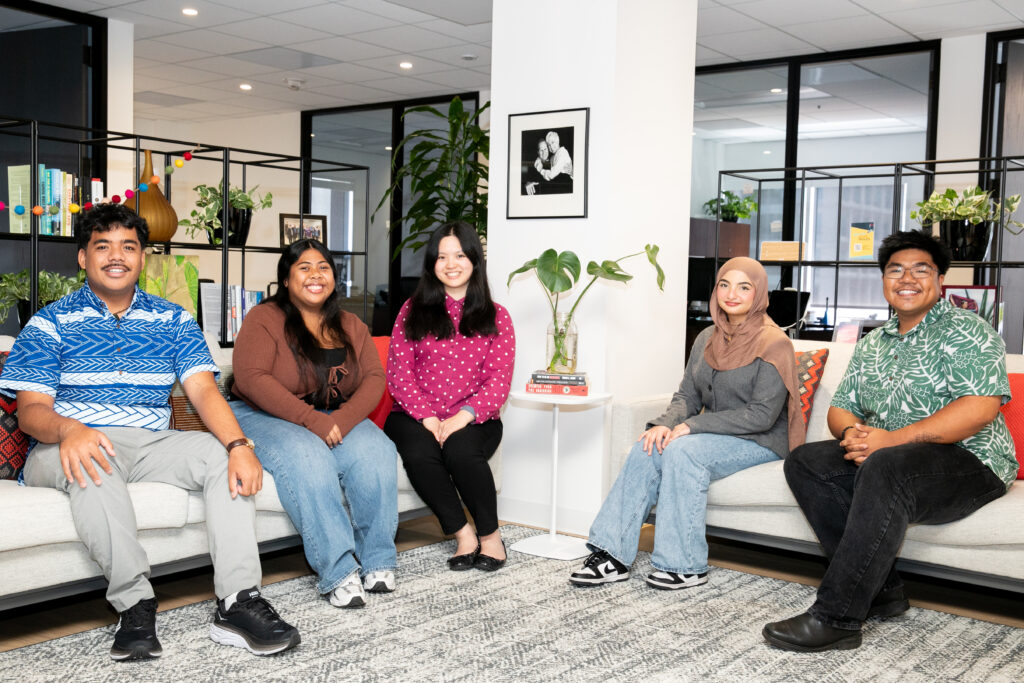
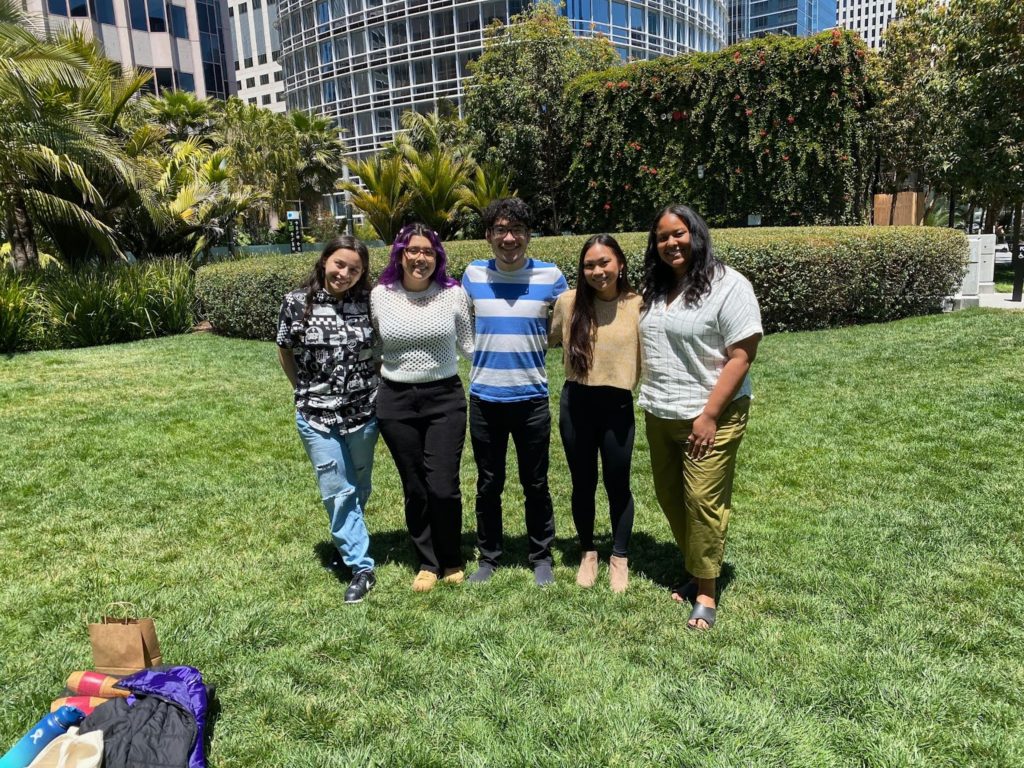
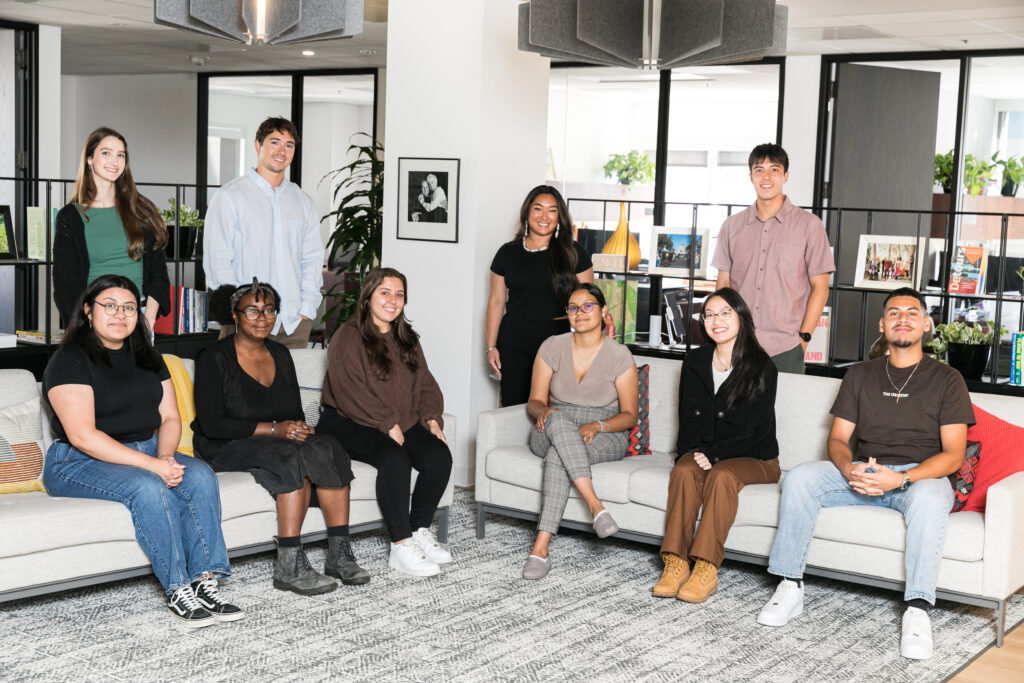
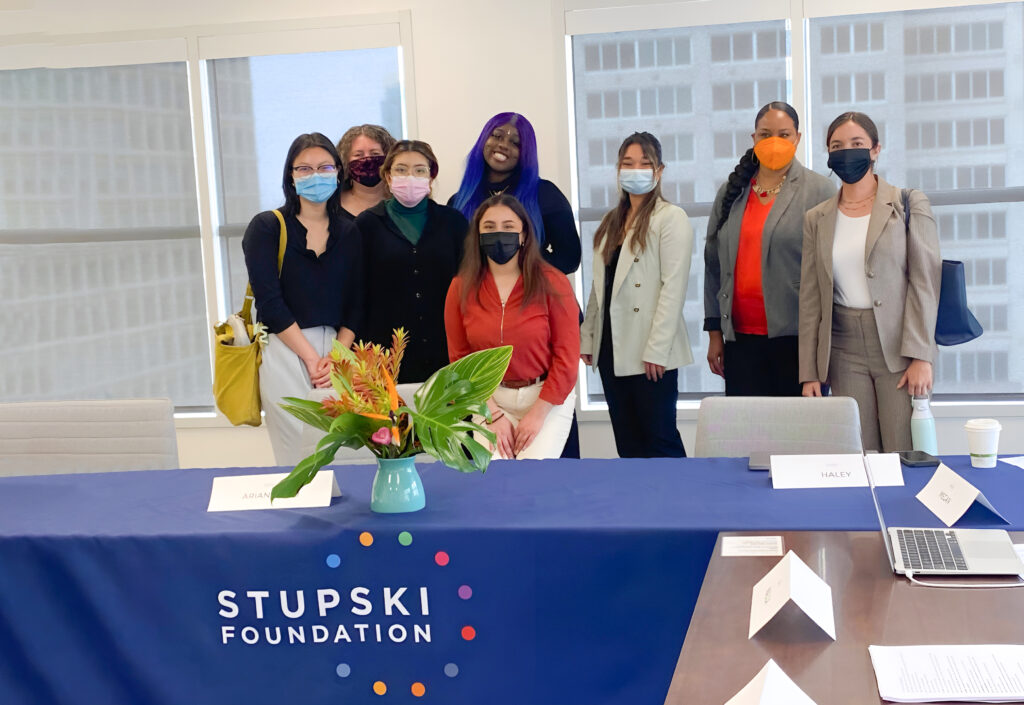
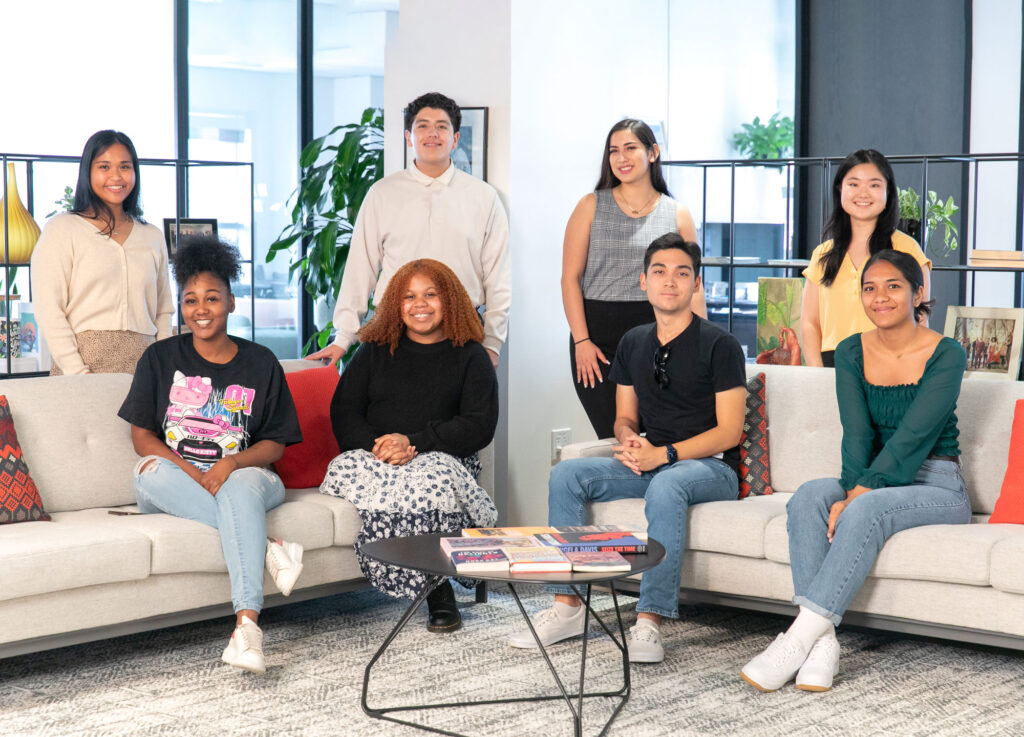
Flip through photos of our intern cohorts since 2020.
Check out examples of work our alumni did during their time at the foundation.
Stacy authored a research report titled, “The Impact of Student Resource Officers and Police Presence on BIPOC Students: Implications for Foundations”

Amara delivered a project titled: “Understanding the Holistic Needs of Undocumented People and What We Can Do to Support Their Liberation.”





Megan collected stories from the Asian diaspora about how communities are fighting for food justice.

Maritza shared her experience in philanthropy.

Anna outlined how foundations can improve their decision-making by centering student voices.


Alyssa analyzed the disparities in philanthropic funding for the Asian American, Native Hawaiian, and Pacific Islander communities and ways funders can address inequities and advance solidarity.

Ieshia investigated the unique challenges students of color encounter when seeking mental health services and highlighted the value of student-centered solutions.

Inekissi produced a video featuring voices of Native Hawaiian and Pacific Islander students to offer funders solutions for changes that these students seek to improve postsecondary success in their communities.

Jessica wrote an essay to education funders and institutions to advocate for greater investment in open spaces for youth to support their mental health.

Joshua researched school-based work-based learning (WBL) programs on Oʻahu and presented recommendations for funders to address disparities for students who lack access to WBL opportunities.

Josue produced a video project featuring the voices of DREAMERS, students who are undocumented, to illuminate ways education funders should engage with and support these students.



Aaliyah produced an analysis of the impacts of the college debt crisis on non-tuition barriers to middle-class college students in the California State University and the University of Hawai‘i systems.


Bethany produced a social media video series on food justice in Hawaiʻi to reconnect us to our food and where it comes from.

Johann created a video featuring youth leaders and staff at youth-serving organizations in California to highlight the importance of investing in youth power building.

Kimberly created a toolkit for navigating grant applicantions and funder partnerships to reduce the fundraising burden on nonprofit leaders.

Mariah produced a video on how leaders with intersectional identities navigate the philanthropic sector and how we can continue to learn from our identities to work toward decolonizing the philanthropic sector.

In the aftermath of the tragic Lāhainā's fires, McKenzie delivered an analysis of how Lāhainā's youth are fairing today and what supports they want and need for ongoing recovery.

Talia’s project, E ola nā leo mai nā kamaʻāina ʻo Lānaʻi, compiled perspectives among Lāna‘i residents to explore the needs and opportunities on the island as the community works to ensure that the legacy of Lānaʻi endures.

Inspired by the growing spend down movement, Trent created a guide for prospective donors on the different ways to spend down.

Viridiana created a landscape analysis of the challenges and opportunities in the Latinx population in Alameda County to encourage funders to direct more funds to this community we depend upon.

Faheemah created a grantee spotlight social media series to amplify the voices of community leaders across the Bay Area.

Flomi planned and executed a peer panel event on the importance of mentorship in shaping our futures at her community center in Palolo Valley.

Sandy surveyed our internship alumni to capture their experiences during and after the program, helping inform the transition of our internship in 2027.

Clyds developed and executed Hawai‘i’s first Food Policy Hackathon, collaborating with a team of community members to support youth leaders in developing policy solutions addressing challenges in the local food system.

Pahonu reflected on navigating life as a Native Hawaiian ʻōpio leader through a moʻolelo of resilience and resistance, highlighting the role of language, culture, and ʻāina in restoring autonomy.

Khalil developed programming recommendations for an Internship Alumni Professional Development Series co-designed with our interns and alumni to support youth in building confidence and navigating early career pathways.

Saidy conducted research on the connections between our food, agriculture, and immigration systems. She offered philanthropic solutions to support the undervalued communities that cultivate and bring food to our tables.

Timothy analyzed how Christian theology shapes historical and contemporary environmental injustices. His project offered recommendations to reevaluate religious doctrine and invest in justice-oriented systemic solutions.


In their report, “Burn the House Down”, Gilbert and Godswill interviewed 24 Stupski grantee partners to understand how they are impacted by Stupski’s spend down. Their findings interrogate the 5% “rule” and offer insights from grantees impacted by limited giving practices.
In their report, “Burn the House Down”, Gilbert and Godswill interviewed 24 Stupski grantee partners to understand how they are impacted by Stupski’s spend down. Their findings interrogate the 5% “rule” and offer insights from grantees impacted by limited giving practices.

Because the Stupski Foundation is nearing the end of our spend down, this will be the final year of the internship program. Applications for the internship are closed.
We have selected the final candidates for this year’s internship, and we will announce them publicly soon. We look forward to sharing news about the future of the program (which will continue after we close the foundation!) and new opportunities for young people interested in working in philanthropy.
Applications are closed for our final internship cohort in 2027.
However, the program will live on with our partners once we transition the program out of Stupski in late 2027.
We will announce the transition in early 2027. To receive updates about the next iteration of the internship program, sign up for our newsletter and follow us on LinkedIn and Instagram.
Yes! We are excited to share news soon about the internship program, which will live on with our partners.
Applications are closed for our final internship cohort. We have selected the finalists for our final internship cohort for 2027 and we look forward to announcing them soon!
For additional updates about the future of the internship program after 2027, sign up for our newsletter and follow us on LinkedIn and Instagram.
Our interns focus their work in either the Bay Area or Hawaiʻi across the following themes connected to Stupski’s programs: 1) advancing equity in philanthropy, 2) highlighting community leadership and resilience, 3) systems change, or 4) ways philanthropy should respond to community calls to action.
Interns earn $30/hour.
Yes, the internship is designed to be done in concert with interns’ class and work schedules. Interns will establish their schedule each semester with their advisor to ensure they can participate in group meetings and the professional development speaker series.
Interns work between 10-15 hours a week for the six-month internship program.
The internship program is intended for students currently enrolled in undergraduate or vocational programs. However, for the food justice internship role, we will consider students who are currently in graduate programs that focus on food justice. For all other internship roles, we do not accept applications from current graduate students.
Applications for our internship are closed.
To allow enough time to complete school and internship responsibilities, we do not advise students with full-time jobs to apply for this internship.
No. This internship opportunity is for youth, students, and young adult leaders to inform our grant-making and gain professional experience to start their social change careers.
The foundation values voices and perspectives from youth in the communities it calls home in Hawaiʻi and the San Francisco Bay Area. This internship is therefore for youth who are from the Bay Area and Hawaiʻi. Applicants with lived experience in these communities (even if they are currently living elsewhere) are encouraged to apply, so long as they are located in either the HST or PST time zones.
Stupski loans interns a laptop with software and necessary subscriptions (Zoom, etc.) and any technology support required to fulfill their duties.